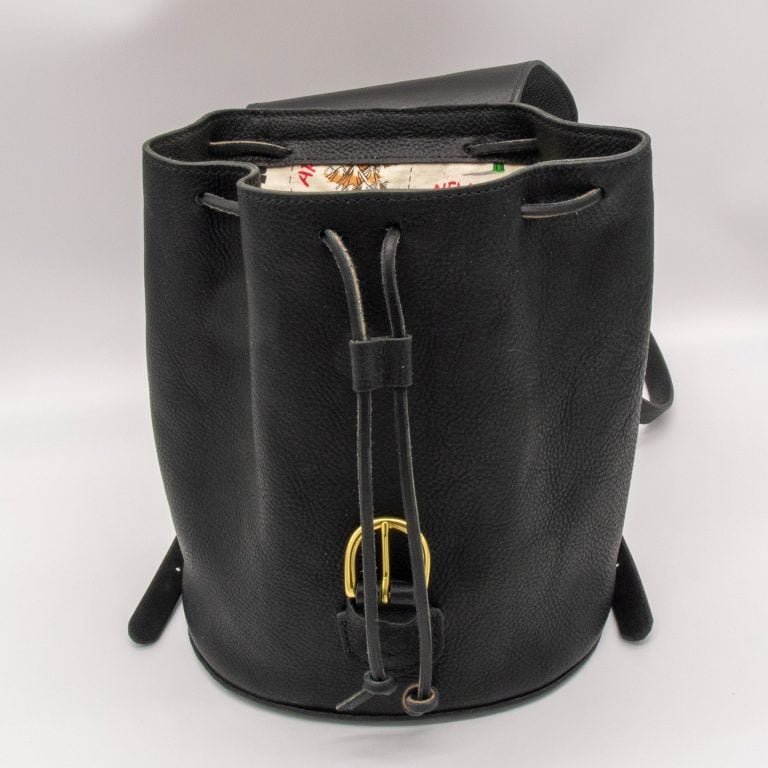
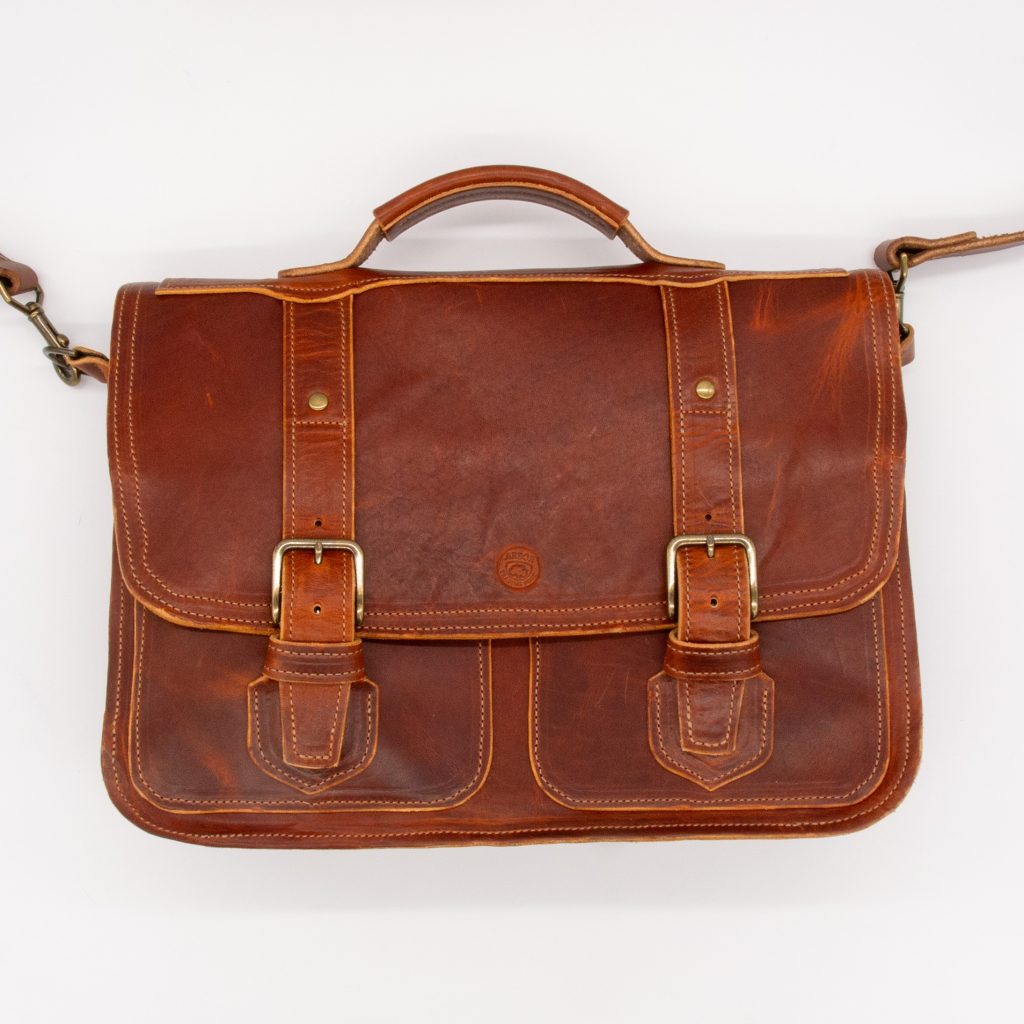
A leather messenger bag for commuting solves problems that backpacks don’t and creates none of the ones people assume it does. After a week of daily carry, most commuters who make the switch don’t go back. The reasons are practical: faster access, better body positioning on transit, a cleaner silhouette at the office. The fact that a well-made leather bag also develops character through every commute it makes is the part that turns a practical decision into a lasting one.
This guide covers the real commuting advantages of the messenger format, addresses the objections honestly, and explains what separates a bag built for daily professional carry from one that looks the part for six months and fails by winter.
The Core Problem with Backpacks for Commuters
Backpacks are designed for sustained carry on foot: hiking, campus, travel. For urban commuting, they create friction in three specific situations that happen every day:
Getting something out. With a backpack on your back, accessing the main compartment requires either taking it off, swinging it to your front, or asking someone nearby to reach in. On a train platform or in a meeting, this is legitimately awkward. With a messenger bag worn across the body, you swing the bag forward and open it one-handed without breaking stride.
Sitting and standing on transit. A backpack forces you to hold it in front of you on a crowded train, or set it on the floor, or spend the ride slightly hunched. A crossbody messenger bag stays at your hip, takes up no additional space, and requires no management.
Arriving at work. The backpack silhouette reads active and athletic; appropriate in some offices, less so in others. The leather messenger reads professional: it’s the same form factor that briefcases evolved from, but in a format that wears at the shoulder and moves with you.
Why the Single-Strap Load Distribution Works Better Than You Think
The objection to messenger bags almost always comes down to the shoulder: “Won’t one shoulder take all the weight?”
For short carries and reasonable loads such as a 13″ laptop, a notebook, a water bottle, keys, phone etc. a messenger bag worn correctly distributes the load across the shoulder and hip, not just the shoulder. The long strap position means the bag rests against the body with the weight shared between the strap and the bag’s contact with your torso. Many commuters find this more comfortable than two-strap carry because the bag can be repositioned in seconds by simply sliding it.
The functional advantage is significant: messenger bags let you adjust carry position mid-commute without stopping or removing the bag. On a long transit commute, this matters more than it sounds.
For loads over 20 pounds, a backpack is genuinely the better choice for extended carry. But a commuter’s daily load is rarely that. Most daily carry is well within the messenger format’s comfortable range.
Quick Access Organization: How a Messenger Bag Earns Its Keep
The best leather messenger bag for commuting has a simple, purposeful interior: one main compartment large enough for a laptop and daily essentials, a front quick-access pocket for transit cards, phone, and earbuds, and a strap that adjusts without tools.
The Venture Leather Briefcase/Messenger Bag fits a 16″ laptop in a dedicated sleeve with room for a full notebook and a day’s worth of carry. The front pocket is the right size for the things you reach for forty times a day without opening the main compartment. The strap adjusts to wear across the chest or lower at the hip.
The Handcrafted Leather Small Crossbody Messenger Bag in Green covers the lighter-carry commute: tablet, notebook, essentials in a more compact footprint. For commuters who dock at a desktop and don’t carry a laptop every day, the smaller format removes bulk without removing function.
How Leather Develops Character Through Commute Wear
This is the dimension that nylon and canvas messenger bags can’t replicate, and it’s worth understanding.
Full-grain vegetable-tanned leather responds to use. The areas under the most mechanical stress such as the strap anchor points, the corners of the bag, and the front pocket closure develop a denser, richer patina over time. The body of the bag softens slightly without losing its structure, conforming to the natural movement of your body. The color deepens at the worn surfaces and holds its base tone elsewhere.
What this means for a commuter: a leather messenger bag looks better in year three than it does at purchase. The bag that you carry through the Ann Arbor winter, through spring rain on State Street, through a hundred client meetings and ten flights; that bag accumulates its own record. It’s not wear in the deteriorating sense. It’s development.
The hides in Arbor Trading Post bags come from Horween, Wickett and Craig, or Italian tanneries whose vegetable-tanning process uses plant-based tannins and mineral-rich water. The method takes weeks and produces leather with more fiber density and tanning depth than the chrome-tanned alternatives that dominate mass production. That density is what allows the leather to age rather than simply wear out.
The Professional Look on Both Ends of the Commute
A leather messenger bag for commuting handles the morning meeting and the evening close without changing anything. That’s not true of all bag formats.
A technical backpack in ballistic nylon looks appropriate on the way in and slightly off-register at a client lunch. A tote bag works for casual offices and struggles with the organizational demands of a full commute load. The messenger format, especially in full-grain leather in a neutral color, reads as considered and professional at the office while being genuinely functional in transit.
The Handcrafted Crossbody Satchel Bag in Chestnut sits at the more structured end of the messenger spectrum: a clear front flap, a clean silhouette, the kind of bag that reads intentional in any professional setting. The Leather Crossbody Satchel Bag in Chestnut with Turn-Lock Closure adds a brass turn-lock closure that is both more secure on transit and slightly more formal in register.
For commuters who move between casual and formal contexts in the same day, the leather messenger removes a gear-change from the equation.
What Separates a Commuter Bag from a Fashion Bag
Some leather messenger bags are designed to be photographed. Others are designed to be used. The difference shows up over time and under load.
A commuter bag needs:
Solid strap hardware. The swivel hook and D-ring take mechanical stress every time the strap adjusts and every time the bag is set down and picked up. Brass or solid steel holds up for years. Zinc alloy with thin plating will show wear, and eventually failure, within a year of daily use.
Reinforced strap anchors. The two points where the strap attaches to the bag are the highest-stress points in the entire construction. They should be bar-tacked, riveted, or both. A stitched-only anchor without reinforcement will fail eventually under daily carry loads.
A flat, structured base. A bag that holds its shape when set down is a bag whose base panel is built correctly. A bag that collapses means the craftsperson cut corners on the one surface that contacts every table, floor, and seat you set it on.
Burnished/folded over edges at every seam. Commuting involves transit, weather, friction against seats and doors. Edges that are properly finished and sealed will hold. Raw or painted-only edges will start peeling within the first wet winter.
ATP bags are built to meet all four criteria because they’re built for daily professional carry, not for display. That’s a position we’ve held from the first bag made in the Ann Arbor studio.
Commuting with leather: a note on weather
Vegetable-tanned full-grain leather handles light rain well. The hide’s natural oils resist light moisture, and a proper conditioning before the fall season adds additional water resistance. It is not waterproof. In sustained rain, a cover or interior plastic sleeve for electronics is sensible. The bag itself will dry without damage, and a light conditioning after a heavy wetting keeps the leather from drying out.
For care details, the leather care guide covers conditioning schedules, drying, and storage.
Get the most out of your leather carry
We write occasional newsletters on leather bags, care, and the craft behind what we make in Ann Arbor — including what goes into building a bag that holds up to daily professional use. If that’s the kind of content you want in your inbox, we’d be glad to have you.
[Sign up here — free, infrequent, no spam.]
If you’re also comparing leather bag formats more broadly, How to Spot Quality in a Leather Bag Before You Buy covers the construction markers to look for across any style, and The Value of Handmade Leather Goods makes the case for why slow-built bags outperform fast ones over any commuter’s time horizon.