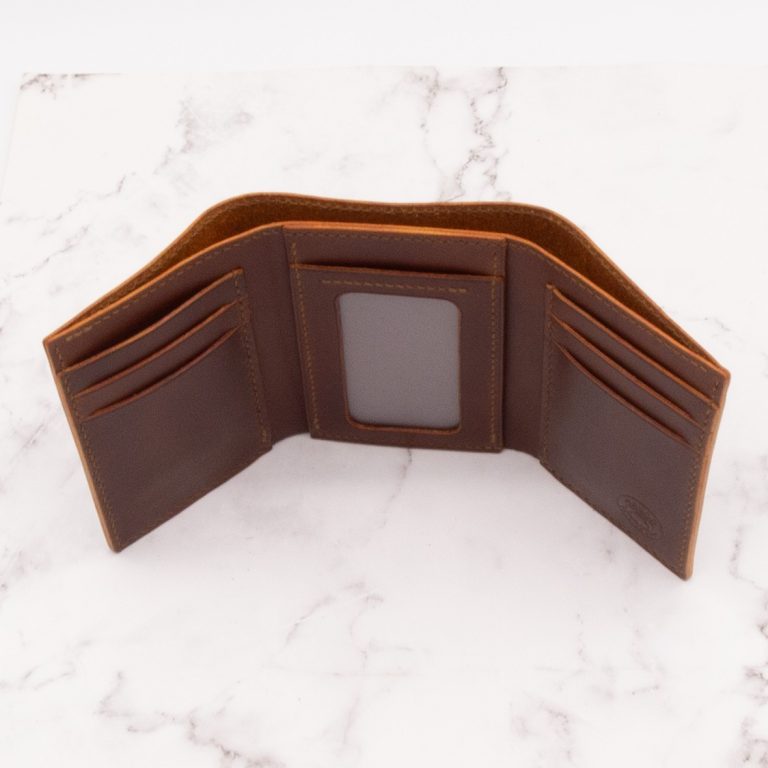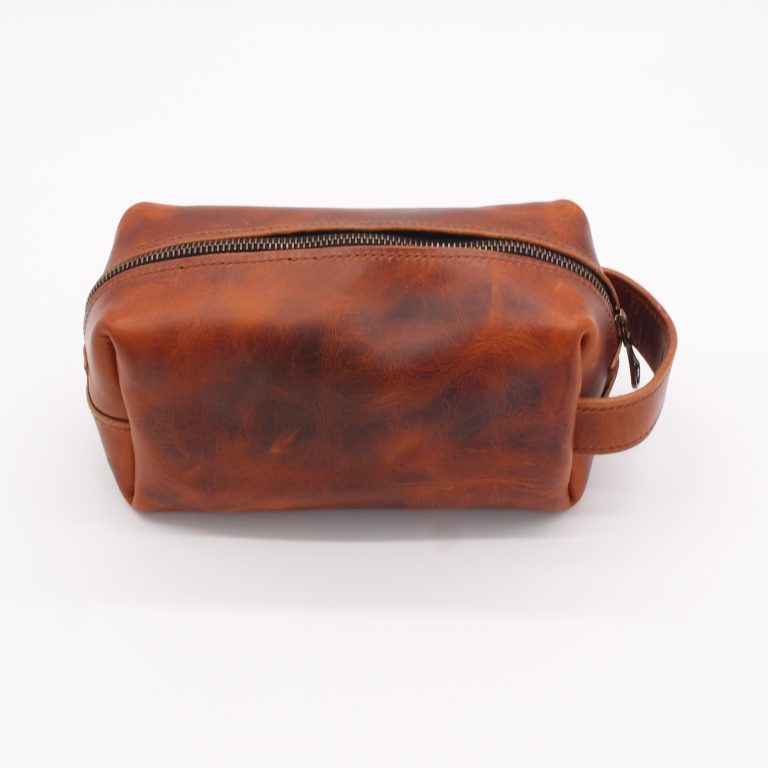
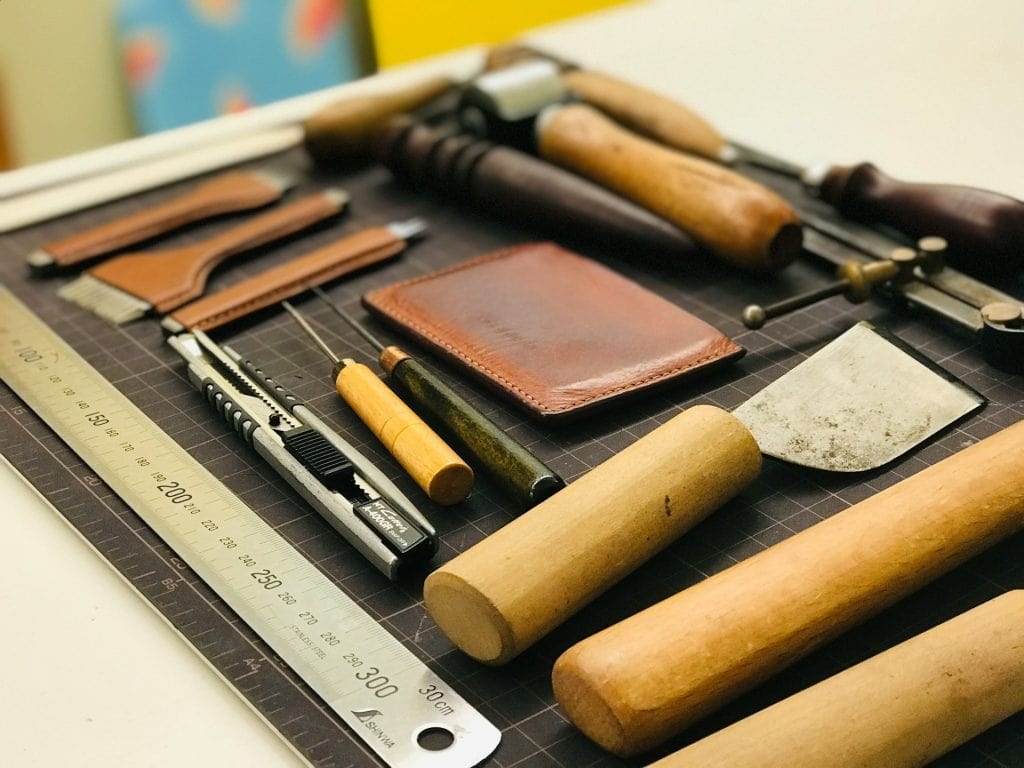
When you’re deciding whether to spend $65 on a wallet or $185 on one, the honest question is: what is the difference, exactly? Not just in theory, but in real life. What are you holding in your hand, and what will you be holding five years from now?
This is a comprehensive comparison of artisan leather goods and mass-produced leather goods, covering every variable that matters: the hide itself, how it was tanned, how the edges are finished, how the stitching is done, what the hardware is made of, and how each ages over time. The gap is larger than most buyers realize and it’s measurable.
The Leather Itself: Grade and Source
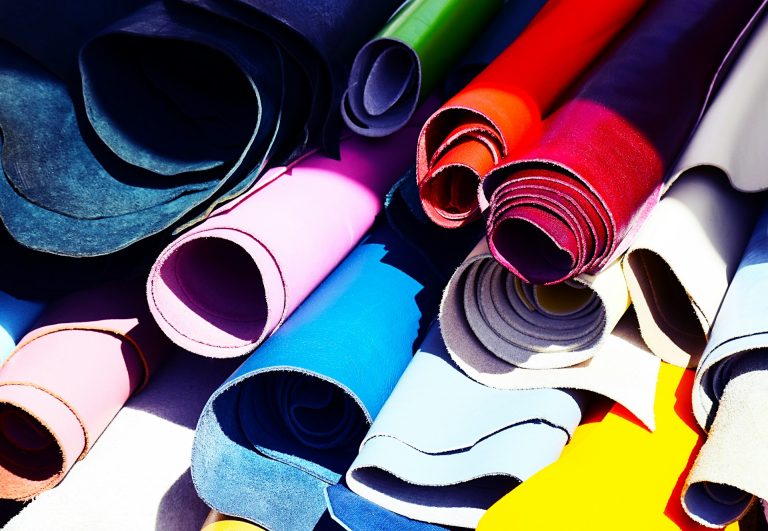
Mass-produced leather goods are almost never made from full-grain leather. The economics don’t allow it. Instead, they use:
- Genuine leather – the lowest grade of real leather. Split from the hide’s bottom layers after the quality top grain is removed. Weak, porous, and prone to peeling.
- Bonded leather – leather fiber scraps glued to a backing with polyurethane. Looks fine in the store. Begins delaminating in 1–3 years.
- PU “vegan leather” – polyurethane plastic with no actual leather content. Usually called “faux leather” or labeled with careful non-descriptors like “premium material.”
Artisan leather goods start with the full-grain surface. This is the outermost layer of the hide, the part that spent years developing a tight, dense fiber structure while the animal was alive. It’s the strongest, most water-resistant, and most beautiful part of the hide. It’s also the most expensive, which is why mass production cuts it away.
At Arbor Trading Post, every piece is made from full-grain leather sourced from traditional tanneries in Tuscany, Italy and the United States. The leather arrives in Ann Arbor as a finished, dyed, conditioned hide. They already represent decades of Italian/American craft before a single cut is made.
Tanning Method: Vegetable vs. Chrome
This is where the environmental and aging difference is most dramatic.
Chrome tanning used in roughly 90% of commercial leather production completes the tanning process in 24–48 hours using chromium sulfate. It produces a consistent, soft, uniform product. It also produces leather that does not develop a patina, does not improve with age, and is not biodegradable in any meaningful timeframe.
Vegetable tanning takes 30–60 days and in many cases upto a year. Hides are submerged in pits of tannin-rich bark (oak, chestnut, mimosa) which bind to the hide’s collagen fibers over weeks. The result is a denser, firmer leather that responds to use. It develops a patina. It darkens at contact points. It becomes more beautiful the more it’s handled.
Our vegetable-tanned leather is among the most respected in the industry for exactly this reason: the slow tanning process produces leather with enduring character; not simulated aging, not artificial distressing, but the real thing that accumulates over years of actual use.
Stitching: Saddle vs. Lock Stitch
Open a mass-produced wallet at the seams and you’ll find a machine lock stitch: a single thread looped through itself. It’s fast and inexpensive to produce. It’s also the kind of stitch where one broken thread can unravel an entire seam.
Artisan leather goods use a saddle stitch: two needles, two threads, each passing through the same hole from opposite sides. Pull one thread and the other locks. A saddle stitch can lose a thread and hold together indefinitely. It’s the stitch used on saddles, harnesses, and flight gear – things where stitch failure is not an option.
At Arbor Trading Post, every seam on our wallets and small goods is hand-saddle-stitched. You can see the regularity of the spacing and feel the thread sitting proud of the leather surface a detail that’s only possible when the work is done by hand, with consistent tension maintained stitch by stitch.
Edge Finishing: Burnished vs. Painted
This is one of the most telling quality tells in any leather good, and most buyers never notice it until they see the difference.
Painted edges are standard on mass-produced goods. These are applied with a roller or brush, sealing the raw leather edge under a coat of colored paint or edge coat. It looks fine when new. Within a year of regular use, particularly at fold points and corners, the paint chips and flakes, leaving a ragged, fraying edge underneath.
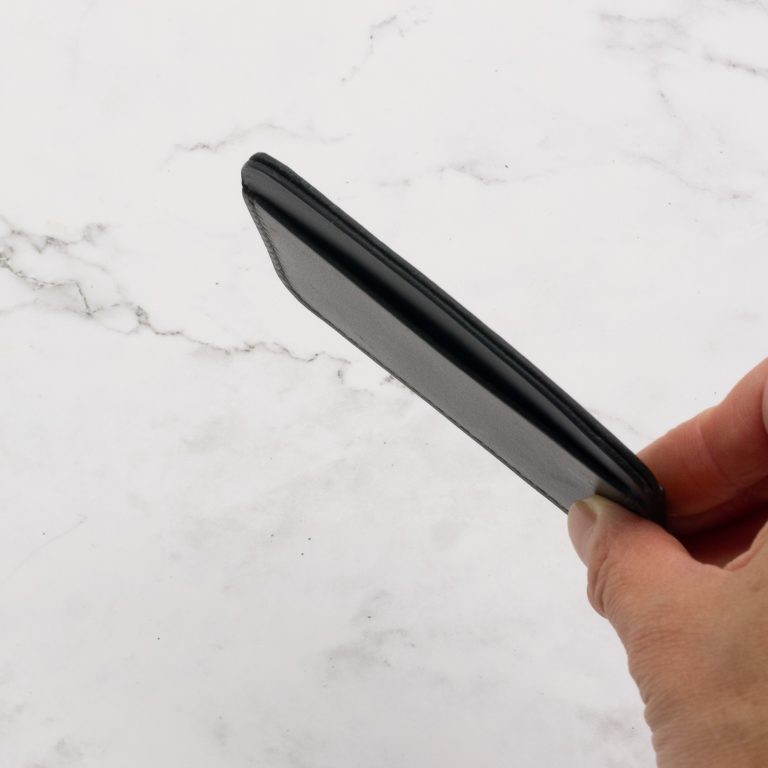
Burnished edges are finished by hand: the raw leather edge is first beveled to remove the sharp corner, then dampened and worked with a wood or bone burnishing tool until the leather fibers compress and fuse into a smooth, rounded, polished surface. No coating is applied; the edge is the leather itself, smoothed to a shine.
A burnished edge doesn’t chip. It doesn’t flake. With use, it polishes further. On a well-made piece, the edges are often one of the last things to show wear decades into the life of the goods.
Hardware: Solid vs. Plated
Mass-produced metal hardware such as buckles, snaps, clasps, and rings is almost universally zinc die-cast with a chrome or brass plate over it. The plate wears off. Underneath is a pot-metal alloy that tarnishes, pits, and sometimes breaks.
Artisan goods use solid brass or solid stainless steel hardware. Brass develops a warm patina that coordinates with aged leather. Stainless holds its finish indefinitely. Neither is a thin coating over a softer base. What you see is what’s there all the way through.
The Aging Comparison: Year by Year
| Mass-Produced | Artisan (Full-Grain Veg-Tan) | |
|---|---|---|
| Day 1 | Soft, uniform, finished | Firm, structured, slightly waxy |
| 6 months | Surface scuffs easily, doesn’t heal | Scuffs buff out; leather softens at use points |
| Year 1 | Edge paint begins chipping at folds | Burnished edges polish further; patina begins |
| Year 2 | Bonded leather begins delaminating | Leather breaks in fully; darkens at contact points |
| Year 3 | Stitching frays; structural failure possible | Saddle stitch fully seated; goods look better than new |
| Year 5+ | Landfill | Heirloom. Pass it on. |
Repairability and Traceability
If a mass-produced leather good fails, it’s not designed to be repaired. The bonded leather can’t be resoled. The chrome-tan surface can’t be reconditioned meaningfully. The hardware can’t be replaced without destroying the piece. The supply chain is opaque. You cannot find out what hide, what tannery, what chemicals produced what you’re holding.
Artisan leather goods are repairable by design. A broken stitch can be resewn. A dried piece can be conditioned back. A scratched surface can be buffed. Hardware can be replaced. And the provenance is traceable: we can tell you the tannery, the leather grade, the tanning method, and the Ann Arbor studio where your piece was made.
That traceability is important. When you know what went into something, you know what you’re paying for.
Want to See the Difference in Your Hands?
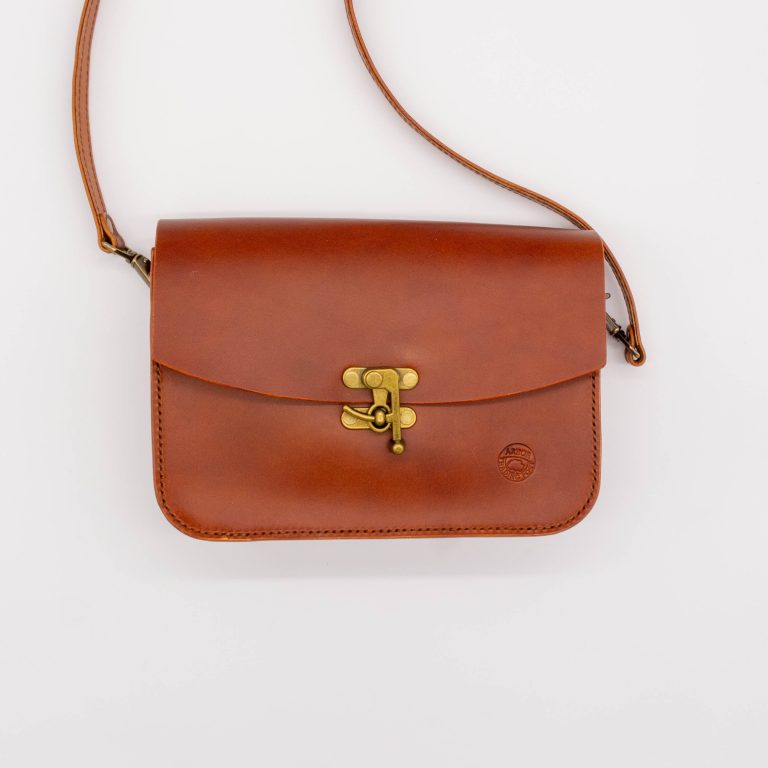
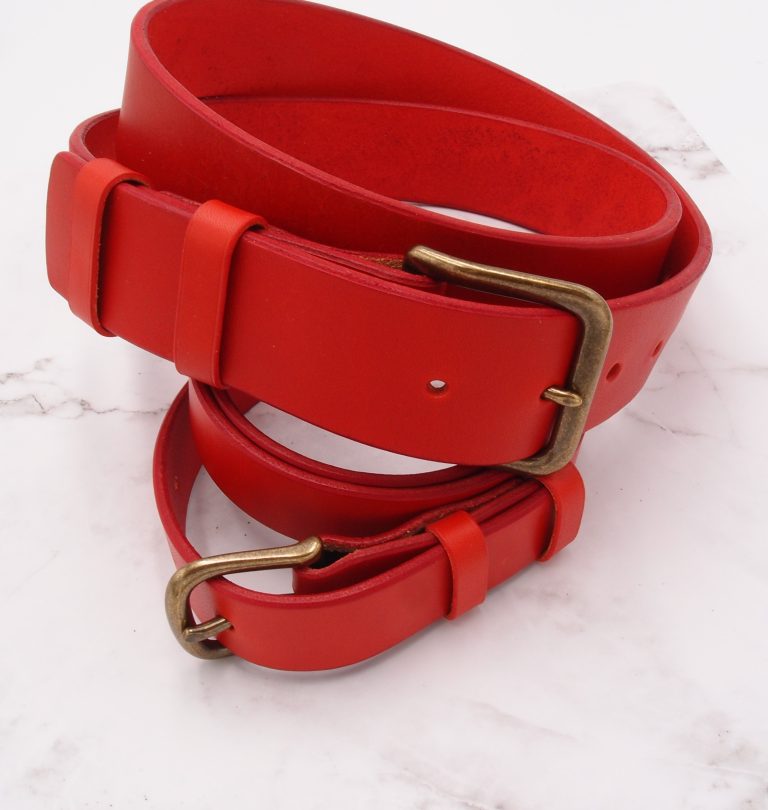
The best way to understand what artisan leather goods actually are is to hold one. Browse the full Arbor Trading Post collection: from classic bifold wallets to handcrafted leather bags to full-grain leather belts, all made in Ann Arbor from full grain vegetable-tanned leather.
Join the list. We write about craft, leather, and why it matters.
Every few weeks we send out short pieces on leather craft, care, and the Arbor Trading Post studio – no filler, no sales blasts. If you found this comparison useful, you’ll find the newsletter worth keeping.
Related Reading
If this comparison raised questions about leather grades or tanning methods in more depth, these posts go further: