When you first pick up a leather product, your attention goes to the feel, the smell, the design. But the real test of quality often hides in a place most people overlook: the edges.
Run your fingers along the sides of a wallet or bag. Are they smooth and sealed, or rough and fibrous?
That single detail tells you almost everything about how the product was made, how long it will last, and whether it truly deserves to be called “handcrafted.”
In this article, you’ll learn why edge finishing is one of the most important markers of quality leather goods and how to instantly recognize the difference.
What Is Edge Finishing in Leather Goods?
Before you evaluate quality, you need to understand what edge finishing actually is.
Edge finishing is the process of treating the exposed edges of leather to create a smooth, sealed, and durable surface. This involves multiple steps, often done by hand, to ensure both durability and refinement.
Key Steps of Proper Edge Finishing:
Step 1: Sanding the raw edge to remove uneven fibers.
In most cases, we also round off the sharp edge on either side of the leather panel before we sand. This creates a soft rounded edge that feels great to touch, sits well in your pockets or purse, and has no sharp edges that could damage other products around it.
We use multiple grits of sand paper to sand. The coarser grits are used to even the surface, while finer grits are used to smoothen the edge dramatically. The very fine grit sandpaper we use is not available for purchase in regular or hobbyist stores and has to be ordered from specialty leather craft stores.
Step 2: Applying burnishing compounds or edge paint
Edges are finished in 2 distinct ways. They are either edge painted, or they are burnished. Burnishing is the first choice, but in situations where we are working with very soft leather, burnishing is not possible. In those cases we will edge paint the leather.
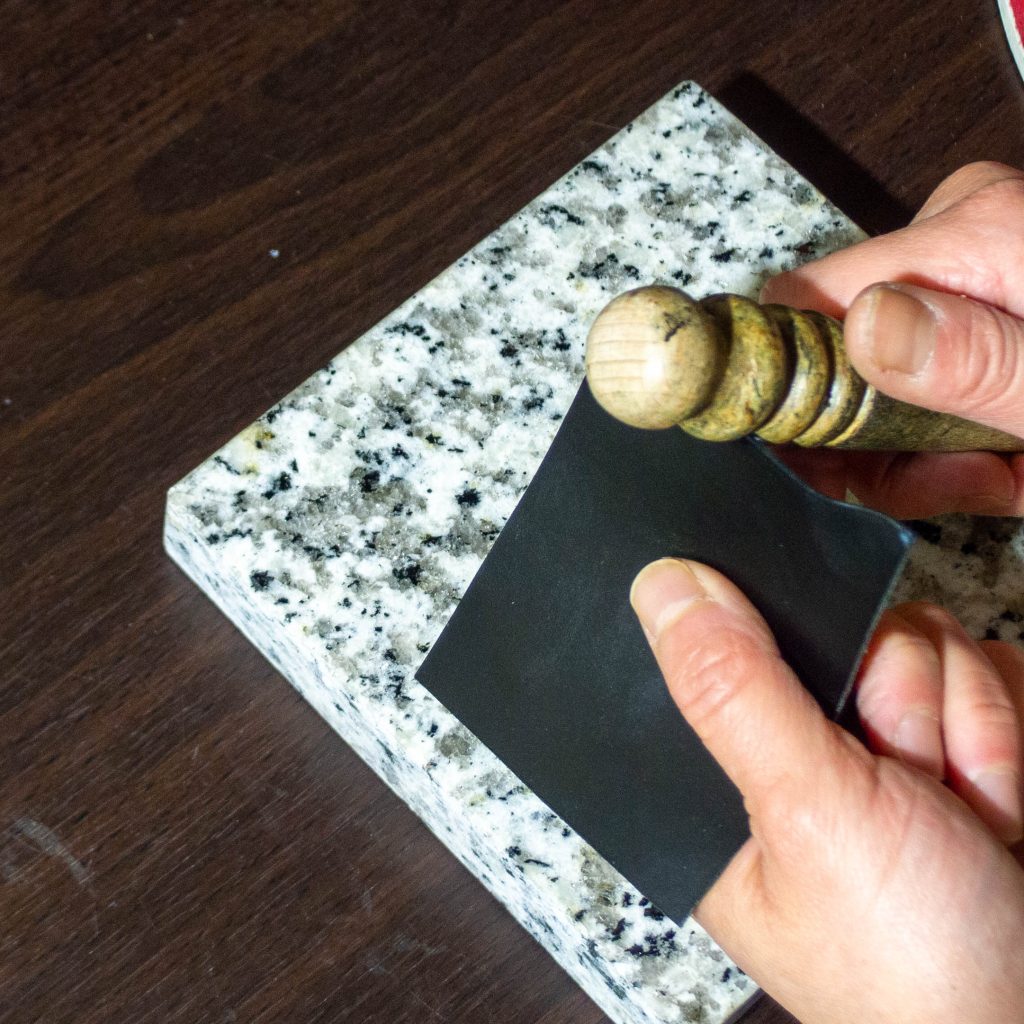
We use vegetable tanned leather which takes burnishing very well. We apply burnishing compounds (Tokonole or similar). These compounds contain oils and butters that permeate the raw edge. After applying the compound, we use a burnishing tool to hand burnish the edge (as pictured in the main image above).
Chrome tanned leather (which we do not use) and very soft vegetable tanned leather (such as lamb skin or goat skin) does not allow burnishing. In these situations, we use specially formulated edge paint that seals but will not crack when the leather is flexed.
Step 3: Polishing and sealing the surface for durability
Hand burnishing involves friction that generates heat and seals in the fibers. The oils and other compounds create a smooth surface with sheen. We also apply wax and seal it in so the edges are moisture proofed.
If using edge paint, heat is used to smoothen the paint on the surface of the edge. The heat also helps the paint to permeate the fibers for a strong adhesion.
Step 4: Repeating the process multiple times for a refined finish
Burnishing and edge paint application is repeated multiple times on the edge to create the ultimate refined finish. After all, luxury is not just in the name on the logo – the product has to be refined and luxurious too.
Once you understand what edge finishing involves, the next question becomes clear: why do some products skip it entirely?
Why Many “Handmade” Leather Goods Skip Edge Finishing
Not all handmade products are created equal. Some cut corners where it matters most.
Edge finishing is one of the most time-consuming and skill-intensive parts of leather craftsmanship. Skipping it allows makers to produce faster and cheaper, while still marketing the product as “handmade.”
Common Reasons Edges Are Left Unfinished:
- Reduces labor time significantly – You can double or triple the output if you skip finishing the edges. This means more profits for the producers.
- Requires skill and experience to execute well – Edge finishing is a skill that comes with experience. A poorly executed edge finish makes it obvious that the process was botched.
- Adds material and process costs – Burnishing compounds, edge paint, heat wand, sanding supplies and edger all cost money. There is also labor cost and time investment to finish the products well.
- Not immediately obvious to untrained customers – We have been blessed with sophisticated customers who can tell quality. A finished edge is not what most customers look for and many makers take advantage of this. Some customers also have misguided opinion that a rough edge is a mark of “handcrafting” and a finished edge somehow means it was produced in a factory. This is not correct.
This shortcut may not be obvious at first glance, but over time, it reveals itself clearly.
What Happens When Edges Are Left Unfinished
This is where the difference between craftsmanship and compromise becomes visible. Unfinished edges expose the raw fibers of the leather. Over time, these fibers begin to separate, fray, and degrade. This weakens the product structurally. You will see worn-out appearance much earlier in the lifecycle of the product. The edges are more susceptible to moisture damage.
In short, the product will look worse and will not last long because the maker cut corners.
A product with properly finished edges will look like fine leather goods should, and will last a lifetime.
The Benefits of Properly Finished Edges
Edge finishing is not just aesthetic. It is structural, functional, and experiential.
Durability That Compounds Over Time
A sealed edge protects the leather from environmental exposure, significantly extending the product’s life. We make leather products that are investment pieces that get better over time. Finished edges help your investments last longer.
Refined Look That Signals Quality
Smooth, polished edges immediately communicate craftsmanship and attention to detail. It also communicates that the artisan takes pride in their work and will not let a half-done product go into the customer’s hands.
Better User Experience
You feel the difference every time you handle the product. No roughness, no loose fibers, no deterioration. Shouldn’t your luxury product feel luxurious?
At the highest level of leather craftsmanship, edge finishing is not optional. It is expected.
How to Identify Quality Edge Finishing (Even If You’re Not an Expert)
You can train your eye in seconds. Below are two images, the first one shows a finished product with finished edges. The second image shows edges that are not finished.
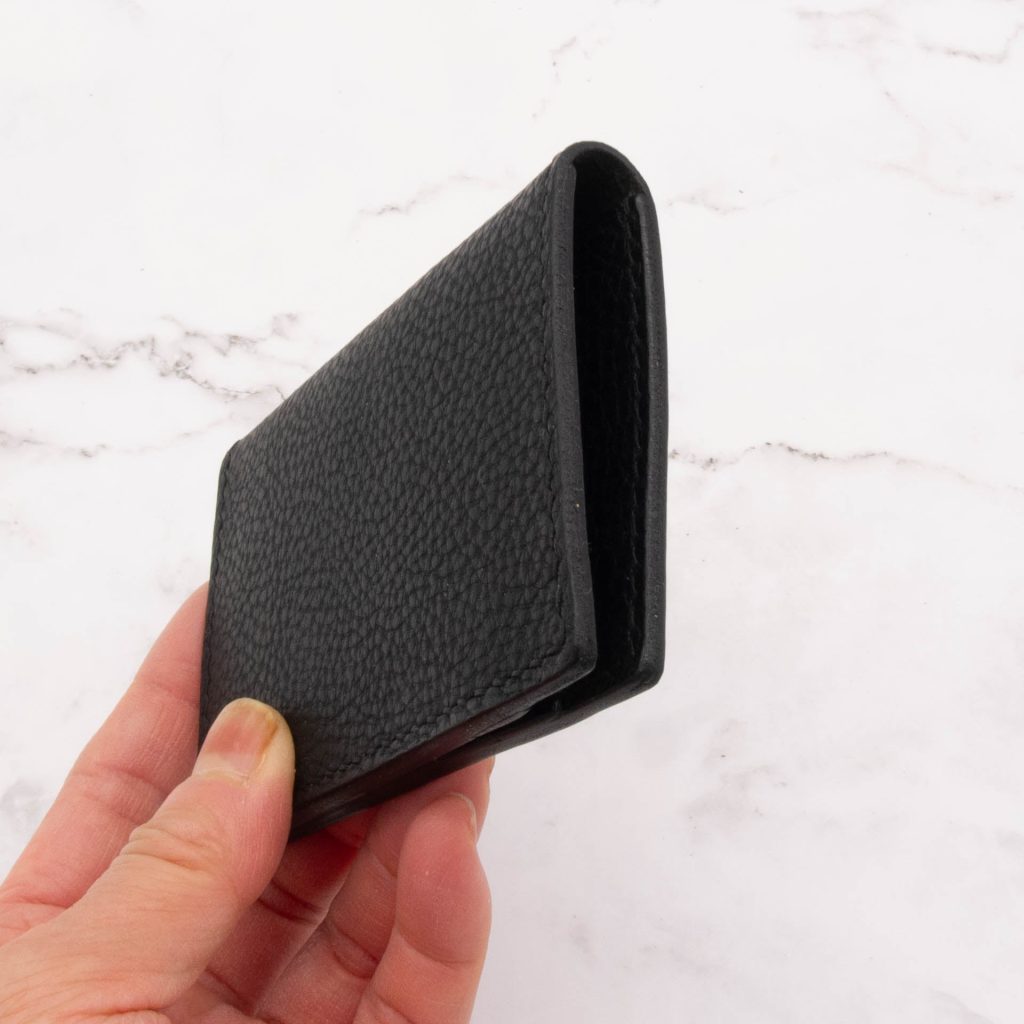
This is what you see in a product with finished edges
- Smooth, even edges with no visible fibers
- Consistent color and finish along all edges
- Slight sheen or polish depending on technique
- No cracking, peeling, or rough patches
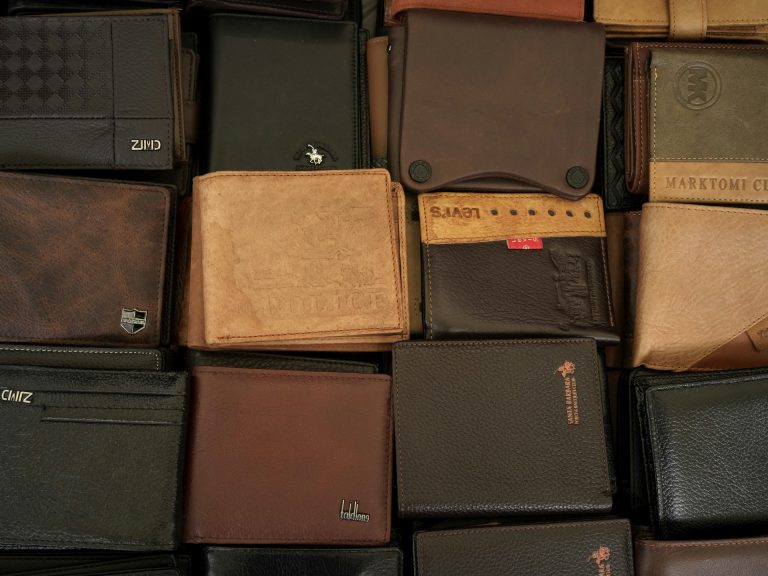
this is what you see in a product with unfinished edges
- Fuzzy or hairy edges
- Uneven or jagged cuts
- Dry, raw-looking sides
- Edges that feel rough to the touch
Once you know what to look for, the difference becomes impossible to ignore.
Our Approach: Why We Never Cut Corners on Edge Finishing
At Arbor Trading Post, every piece is built with longevity in mind.
We use full grain vegetable-tanned leather sourced from premium tanneries in the U.S. and Italy. This type of leather deserves finishing techniques that match its quality.
Each edge is carefully prepared, finished, and refined through a multi-step process that prioritizes both durability and feel.
This is not the fastest way to make a product. It is the right way.
And this philosophy extends beyond technique. It reflects how we think about craftsmanship as a whole.
Anyone can assemble leather. Few take the time to refine it. Edge finishing represents a mindset. It signals whether the maker is focused on short-term output or long-term quality.
When you choose a leather product, you are not just buying an object. You are choosing how it will age, how it will perform, and how it will represent you over time.
We want you to have the quality product that you desire and be able to enjoy it for long time.
Once You See It, You Can’t Unsee It
Edge finishing is one of those details that changes how you evaluate every leather product going forward.
What once looked similar now reveals clear differences in quality, care, and craftsmanship.
The next time you pick up a wallet, bag, or belt, run your fingers along the edge. That single moment will tell you everything you need to know.